

Is Shein Fast Fashion? The Real Answer, Controversies, and Better Alternatives
Shein is fast fashion, more specifically ultra-fast fashion; it runs on extreme product velocity, ultra-low prices, and a test, learn, and restock supply chain that can scale winning items fast. That model is exactly why it’s popular; it’s also why Shein keeps getting hit with controversies around labor, transparency, waste, and copying.
Key takeaways
- Verdict: Yes, Shein is fast fashion, “ultra-fast” by today’s standards. (Wikipedia)
- How it works: small test batches, real-time demand signals, rapid restocks. (SHEIN Group)
- Big risks: environmental footprint, labor conditions, transparency gaps, and IP copying lawsuits. (IME)
Best alternative path: secondhand first, then better-made basics, then rentals for one-off looks. (UNEP – UN Environment Programme)
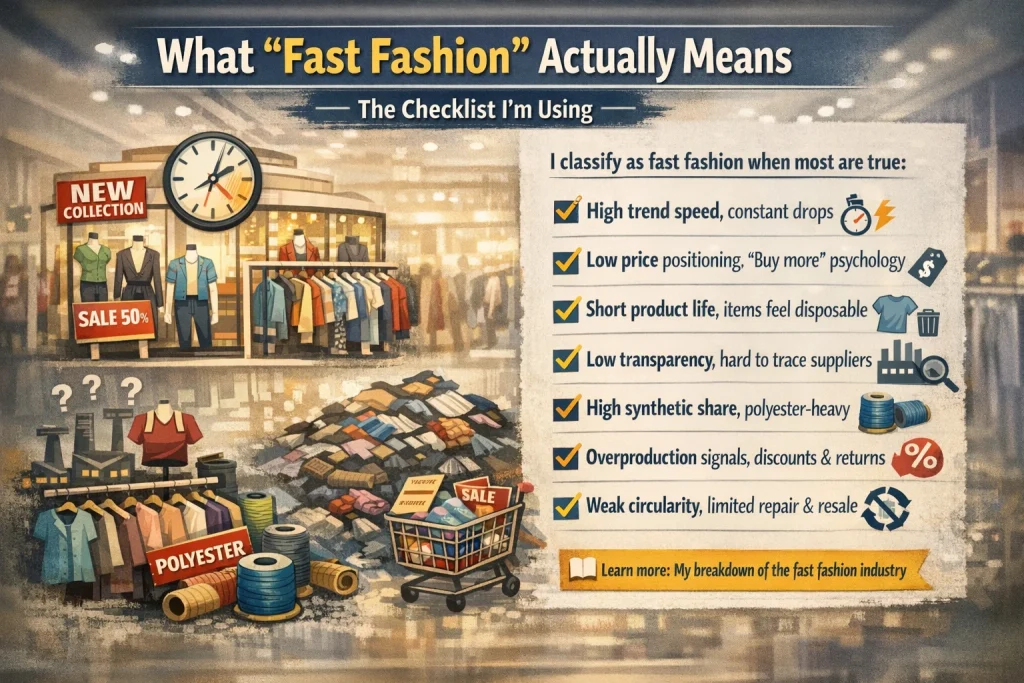
What “fast fashion” actually means, the checklist I’m using
Fast fashion is a business model that copies trends and brings them to market quickly at low cost, pushing high turnover and frequent newness. The term got linked to Zara’s model in the early 1990s, then became a catch-all for the wider industry strategy. (Wikipedia)
I classify a brand as fast fashion when most of these are true:
- High trend speed, constant drops
- Low price positioning, “buy more” psychology
- Short product life, items feel disposable
- Low transparency, hard to trace suppliers and materials
- High synthetic share, polyester-heavy ranges
- Overproduction signals, heavy discounts, high returns
- Weak circularity, limited repair, resale, take-back programs
To learn more in detail about the whole fast fashion industry and how they came to be, you can read my complete breakdown of the fast fashion industry.
Shein in one paragraph
Shein started in 2008; it’s a global e-commerce fashion platform, with a corporate structure and headquarters in Singapore, while relying heavily on a China-centered supplier network. (Wikipedia)
Its edge is speed plus variety; it adds thousands of new styles daily, amplified by aggressive social marketing and influencer “haul” culture. (TIME)
How Shein’s model works and why it’s “ultra-fast”
Shein openly describes an on-demand workflow: launch new items in small initial batches (around 100 to 200 pieces), watch real-time demand, then restock what sells. (SHEIN Group)
This is a smarter inventory engine than old-school “make huge volume, discount later”, but it also enables something more intense, an endless stream of micro-trends, micro-drops, and impulse buys. (TIME)
The Shein growth engine, translated into plain English
- Trend mining: social content becomes product ideas fast (TIME)
- Test batches: small runs reduce risk, not necessarily total volume (SHEIN Group)
- Algorithmic retail: the app behaves like a discovery feed, not a store
- Influencer flywheel: affiliate links and hauls create constant demand (TIME)
Direct shipping: many small parcels, often structured under low-value shipment rules (more on that below). (Reuters)
The verdict: Is Shein fast fashion?
Yes. By the definition and by how it operates, Shein is fast fashion, and it often fits the “ultra-fast fashion” label because of its extreme product velocity and trend churn. (Wikipedia)
Shein fast fashion scorecard
Scale: 0 (best) to 5 (worst); a higher score means “more fast fashion behavior.”
| Category | Score (0–5) | Why it gets that score |
|---|---|---|
| Drop speed | 5 | Thousands of new styles daily |
| Price positioning | 5 | Ultra-low prices, volume-driven model |
| Materials mix | 4 | Heavy reliance on synthetics is a frequent criticism in ultra-fast fashio |
| Supply chain transparency | 4 | Repeated scrutiny over traceability, especially cotton origin questions |
| Worker protection signals | 4 | Investigations and admitted breaches around hours and conditions |
| Waste and returns pressure | 4 | Low prices drive overbuying; high return rates are structurally common in online apparel |
| Circularity (repair, resale, take-back) | 4 | Limited evidence of circularity compared to slow-fashion leaders |
| Copying risk (IP disputes) | 4 | Long-running pattern of IP allegations and lawsuits |
Why Shein is so popular
People don’t buy Shein because they think it’s ethical; they buy it because it solves real-world constraints:
- Price is the gatekeeper, especially for teens, students, and tight budgets
- Infinite choice, the catalog feels endless (TIME)
- For entertainment shopping, the app is built like content
- Trend speed, you can match whatever TikTok is pushing this week (TIME)
- Low friction, fast checkout, constant promos
This is why “just educate people” won’t kill fast fashion; the alternative has to beat it on convenience, not only morals.
The impact: why fast fashion criticism keeps growing
A lot of Shein criticism is really fast fashion criticism, just concentrated.
1) Climate and water footprint
Fashion is widely cited as a major environmental pressure, often described as the second-biggest consumer of water and responsible for roughly 2–8% of global carbon emissions. (UNEP – UN Environment Programme)
2) Waste, the landfill problem
The fashion system produces massive waste, and textiles are frequently dumped or burned rather than reused. UNEP cites 92 million tonnes of textile waste per year (based on Global Fashion Agenda findings). (UNEP – UN Environment Programme)
Another widely repeated stat, 85% of textiles end up in dumps each year, is referenced in sustainability briefings citing UNECE. (genevaenvironmentnetwork.org)
3) Microplastics from synthetics
Washing synthetic textiles is a meaningful source of ocean microplastics, and EU environment research cites estimates that around 35% of microplastics released to oceans come from washing synthetic textiles. (European Environment Agency)
4) Shipping and low-value parcel economics
Part of Shein’s model depends on huge volumes of low-value shipments. Reuters has reported US efforts to curb the $800 de minimis duty-free threshold that was heavily used by firms like Shein and Temu, and later disruptions and policy shifts affecting China-to-US air shipments. (Reuters)
The controversies, the ones that actually move public opinion
This is where you should be strict and evidence-based; vague moralizing doesn’t rank and doesn’t convince.
Labor conditions and working hours
Investigations have alleged extreme working hours at supplier factories, and Shein has acknowledged breaches and pledged investments to improve standards after scrutiny tied to a TV investigation. (The Guardian)
Xinjiang cotton and forced-labor concerns
Shein has faced repeated questions about cotton sourcing and forced-labor risks tied to Xinjiang, including public pressure during UK parliamentary testimony and coverage noting lawmakers’ frustration with unclear answers. (UK Parliament Committees)
US policy attention around forced-labor laws and fast fashion supply chains also shows up in official committee materials and reporting. (Select Committee on the CCP)
Copying claims and IP lawsuits
Shein has been accused for years of copying designs, and Reuters has covered the scale and nature of IP complaints and litigation risks in Europe and the US. (Reuters)
If you still buy Shein, reduce harm without pretending it’s “ethical.”
This section wins trust because it’s practical and honest.
- Buy fewer items, but wear them more; aim for 30 wears per item
- Avoid impulse hauls, build a cart, wait 48 hours
- Choose higher-durability categories; denim, jackets, knitwear; skip ultra-thin synthetics
- Get sizing right to avoid returns; returns are part of the waste problem
- Wash colder, wash less, reduce microfiber shedding (European Environment Agency)
Resell or donate responsibly; don’t dump bags of barely-worn items
Better options, ethical alternatives to Shein
If your reader wants “same vibe, less damage,” don’t send them to luxury brands; give them realistic routes.
Option A, the cheapest and highest impact, is to go secondhand first
Best for trends, one-off outfits, and experimenting without funding new production. (UNEP – UN Environment Programme)
Option B, rentals for events
Best for weddings, parties, vacations, or anything you’d wear once.
Option C, buy fewer new items, but better basics
If someone keeps buying fast fashion because basics wear out, the fix is better fabric, better construction, and fewer replacements.
Quick comparison table: what to recommend based on budget
| Budget Reality | Best Recommendation | Why It Works |
|---|---|---|
| Extremely tight | Secondhand first | Lowest cost, lowest footprint per wear |
| Trend-focused | Secondhand + rentals | Same novelty, less new production |
| Wants basics that last | Better-made essentials | Reduces repeat buying |
| Wants to shop “less bad” | Capsule wardrobe | Fewer items, more outfits |
Who this is for and who it isn’t
You should follow the alternatives path if
- You buy new clothes monthly, or you do regular “hauls.”
- You care about labor and waste, but still need affordability
- You want fewer pieces that actually last
You might not, realistically, if
- You have a strict budget and zero secondhand access
- You need specific sizing, adaptive clothing, or time-critical shipping
In that case, the harm-reduction checklist above is your best starting point.
FAQ: Frequently Asked Questions about SHEIN
It’s fast fashion by definition and often categorized as ultra-fast fashion because of the speed and volume of new product drops. (Wikipedia)
Low prices come from scale, rapid iteration, and a supply chain designed to test and restock what sells, plus a marketing engine that converts attention into purchases fast. (SHEIN Group)
Sustainability claims exist in many fashion companies, but the fast, high-volume model is structurally in tension with sustainability because it encourages overconsumption and waste. (UNEP – UN Environment Programme)
The most cited are supplier labor conditions, traceability questions including Xinjiang cotton concerns, and repeated IP copying allegations and lawsuits. (The Guardian)
Yes, because the model is demand-driven, fewer impulse purchases, fewer returns, and more wears per item reduces both your personal footprint and the incentives that reward “endless newness.” (UNEP – UN Environment Programme)
Secondhand is usually the best value and the lowest-impact option, especially for trend pieces you won’t wear forever. (UNEP – UN Environment Programme)
