
Shein Controversies, A Timeline of the Biggest Criticisms
Summary
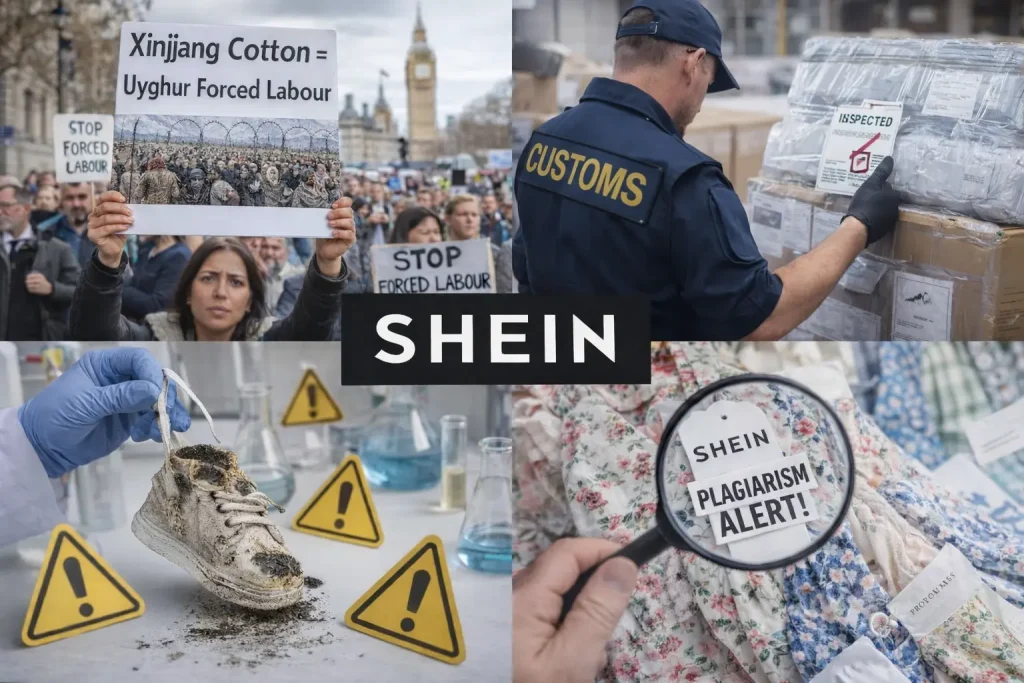
Shein’s biggest controversies cluster into five buckets, labor and forced-labor concerns, product safety and chemicals, dark patterns and pressure selling, greenwashing and misleading marketing, and IP copying lawsuits. Below is a fact-based timeline of the major flashpoints, what regulators, journalists, and watchdogs have alleged or found, and what Shein has said or done in response.
Key takeaways
- Shein has repeatedly been challenged on forced-labor supply chain risk, especially around Xinjiang cotton, including public hearings in the UK. (Reuters)
- Regulators in Europe have escalated scrutiny, from DSA “Very Large Online Platform” obligations to consumer-law actions around discounts and pressure tactics. (Digital Strategy)
- Product safety has been a recurring headline, from Seoul’s tests to EU warnings, and Shein says it has increased third-party testing. (Le Monde.fr)
- Copying claims are not a side story, Reuters has reported 90+ lawsuits alleging plagiarism, and courts have ruled against Shein in specific disputes. (Reuters)
If you want the “what do I do instead” answer, skip to Better options and Where to buy at the end.
How to read this timeline (so it stays useful)
I’m not doing an internet pile-on here. I’m tracking the big, verifiable moments where:
- A regulator issued a finding or fine
- A major outlet published a documented investigation
- A lawsuit or court ruling made the controversy concrete
- A government body escalated scrutiny
When something is an allegation, I label it as such.
Timeline, major Shein controversies and milestones
| Date | Category | What Happened | Why It Mattered | Shein Response, Reported |
|---|---|---|---|---|
| Oct 2022 | Labor | Shein admitted working-hour breaches at two supplier sites and pledged $15M to improve standards. (The Guardian) | First big “yes, issues exist” moment, not just denial. | Announced investment and corrective actions. (The Guardian) |
| Dec 5, 2022 | Labor | Mass affordability is a core growth engine | First big “yes, issues exist” moment, not just denial. | Announced investment and corrective actions. (The Guardian) |
| Jun 22, 2023 | Forced labor, trade | The U.S. House Select Committee released interim findings on Shein and Temu, raising forced-labor and de minimis concerns. (Select Committee on the CCP - Democrats) | Made Shein a political target, not only a consumer debate. | The company has said it bans forced labor and disputes allegations. (Reuters) |
| Jul 2023 | IP copying | Designers sued Shein alleging systemic copyright infringement, including RICO claims in U.S. reporting. (Reuters) | Turned “copying” from social media complaints into litigation with teeth. | Shein said it would defend itself in public statements reported by media. (Reuters) |
| Apr 26, 2024 | Platform regulation | EU Commission designated Shein a Very Large Online Platform under the DSA (Digital Strategy) | Raised legal duties for risk assessments, transparency, illegal goods mitigation. | Shein said it would cooperate and comply. (SHEIN Group) |
| May 28, 2024 | Product safety | Seoul authorities found toxic substances in some children’s products sold on Shein and removed the items. (Le Monde.fr) | “Cheap and trendy” became “is it safe” for mainstream consumers. | Shein has highlighted expanded testing and compliance work. (SHEIN Group) |
| Jun 2024 | IP copying | Reuters reported Shein faced 90+ lawsuits alleging plagiarism, citing U.S. documents. (Reuters) | Reinforced that copying allegations are persistent and large-scale. | Shein has generally said it respects IP and will address claims. (AP News) |
| Jan 7, 2025 | Forced labor | UK lawmakers criticized Shein after a representative declined to confirm whether it uses cotton from Xinjiang, China. (Reuters) | Forced-labor risk stayed central as Shein pursued greater legitimacy. | Shein reiterated a “zero tolerance” stance on forced labor. (Reuters) |
| Feb 6, 2025 | Platform regulation | EU Commission requested info from Shein on illegal products and recommender systems under DSA processes. (Digital Strategy) | Signaled EU scrutiny moving from theory to enforcement posture. | Ongoing cooperation has been stated in company updates. (SHEIN Group) |
| Feb 3, 2025 | Forced labor, IPO | Reuters reported a Uyghur rights group planned a judicial review challenge to Shein’s London IPO over forced-labor concerns. (Reuters) | IPO credibility became tied to supply chain and compliance questions. | Shein denied using forced labor and said it prohibits it globally. (Reuters) |
| May 26, 2025 | Consumer law | EU consumer authorities and the Commission urged Shein to address issues like fake discounts, pressure selling, and unclear rights and gave them one month to propose commitments. (European Commission) | “Dark patterns” and pricing tactics moved into official enforcement channels. | Process-based response: propose commitments or face enforcement. (European Commission) |
| May 29, 2025 | Product safety | Reuters reported Shein would increase product safety testing in 2025 after EU warnings, targeting 2.5M tests. (Reuters) | Response to safety pressure became measurable and public. | Pledged expanded testing and compliance spending. (Reuters) |
| Jun 5, 2025 | Dark pattern | BEUC filed a complaint alleging manipulative “dark patterns” designed to push overconsumption. (beuc.eu) | Framed Shein’s UX as part of the harm, not only factories. | Shein said it cooperates with authorities despite the dispute over engagement. (Reuters) |
| Jul 3, 2025 | Pricing deception | France fined Shein €40M for deceptive business practices around discounts, Reuters reported. (Reuters) | Big monetary penalty, big reputational hit, very concrete. | Shein said it fixed issues after being notified, per Reuters. (Reuters) |
| Aug 4, 2025 | Greenwashing | Italy’s AGCM fined Shein €1M for misleading environmental claims, Reuters reported. (Reuters) | “Sustainable capsule” marketing got legally challenged. | Shein said it would improve internal review processes. (Reuters) |
| Oct 3, 2025 | IP copying | A Swedish court ruled Shein infringed on the copyright of rival Nelly by using photos without permission, Reuters reported. (Reuters) | Court ruling, not just accusations, reinforces IP risk. | Case outcomes vary, but rulings like this keep pressure up. (Reuters) |
| Nov 2025 | Chemicals | Greenpeace Germany reported hazardous chemicals exceeding EU REACH limits in a portion of tested garments. (Greenpeace) | The “safety” debate became persistent, not a one-off Seoul story. | Shein has highlighted expanded testing, but scrutiny continues. (SHEIN Group) |
Controversy “heat map”, what shows up the most
Here’s what the timeline above is actually dominated by:
Scale: 1 = shows up rarely, 5 = shows up constantly
- Consumer manipulation and pricing tactics (fake discounts, pressure selling, dark patterns), 5/5
- Product safety and chemicals (tests, recalls, EU probes, watchdog reports), 4/5
- Forced-labor and supply chain traceability (Xinjiang questions, political pressure, IPO challenges), 4/5
- IP copying and copyright disputes (lawsuits, rulings, photo misuse), 4/5
- Greenwashing claims (environmental marketing challenged by regulators), 2/5
Pricing tactics and dark patterns are now regulator-grade issues, not just internet complaints. (European Commission)
The “big 5” criticisms
1) Forced-labor risk and Xinjiang cotton questions
This is the highest-stakes category because it crosses into human rights, trade restrictions, and corporate legitimacy. UK lawmakers publicly criticized Shein’s lack of clarity around cotton sourcing, and Reuters covered the ongoing focus on Xinjiang-linked allegations. (Reuters)
The IPO angle matters too; Reuters reported a potential judicial review challenge tied to Uyghur forced-labor concerns. (Reuters)
2) Labor conditions at supplier factories
The Channel 4-linked controversy and Shein’s later admission of working-hour breaches is the “origin story” of modern Shein criticism. (The Guardian)
This is also where the brand loses credibility fast, because people intuitively understand that extreme price plus extreme speed usually has a human cost.
3) Product safety and chemical concerns
Seoul authorities reported findings of harmful substances in some products, and later reporting and watchdog work in Europe continued that narrative. (Le Monde.fr)
In response to EU pressure, Reuters reported Shein increased its testing targets, and Shein itself has publicly highlighted millions of tests with third-party agencies. (Reuters)
4) Dark patterns, pressure selling, and fake discounts
This is the new front line because it’s measurable, regulators can act on it, and it explains overconsumption better than moral lectures.
EU consumer authorities warned about fake discounts and pressure tactics, and BEUC’s complaint described dark patterns like countdown timers and scarcity cues. (European Commission)
France’s €40M fine on discount practices makes this category impossible to ignore. (Reuters)
5) Copying, plagiarism, and copyright disputes
Copying is the controversy that won’t die because it maps to Shein’s speed; you can’t industrialize trend-chasing without stepping on IP landmines.
Reuters reported Shein faced more than 90 lawsuits alleging plagiarism. (Reuters)
Courts have also ruled against Shein in specific cases, like the Swedish copyright decision involving photos. (Reuters)
Claims vs evidence, the table that keeps this post honest
| Claim You’ll Hear | What Counts As Strong Evidence | What Exists Publicly Today |
|---|---|---|
| “Shein uses forced labor” | product-level traceability, cotton origin proof, independent audits, enforcement outcomes | intense scrutiny and political pressure, but proof is often indirect or disputed; hearings highlight uncertainty (Reuters) |
| “Shein sells unsafe products” | regulator test results, recalls, compliance orders | Seoul findings plus EU scrutiny, Shein response emphasizes testing expansion (Le Monde.fr) |
| “Shein manipulates people to overbuy” | regulator findings, UX pattern documentation, consumer-law enforcement | EU consumer-law actions and BEUC complaint are explicit on pressure tactics (European Commission) |
| “Shein is greenwashing” | enforcement actions, claims vs standards analysis | Italy fine for misleading environmental claims is direct (Reuters) |
| “Shein copies designs” | lawsuits, court rulings, settlements, documented side-by-sides | Reuters: 90+ suits, plus specific rulings like Sweden photo case (Reuters) |
What Shein says it’s doing, the short version
Shein’s public posture is essentially, “We’re increasing controls.” A few concrete examples:
- Shein says it conducted 2M+ product safety tests in 2024 with third-party agencies. (SHEIN Group)
- Reuters reported Shein targeted 2.5M tests in 2025 after EU warnings. (Reuters)
- On forced labor, Shein has repeatedly stated it bans forced labor and has “zero tolerance” language, while still facing questions about traceability in hearings. (Reuters)
To know more about how Shein operates, you must read this blog, ” Is Shein Fast Fashion? The Real Answer, Controversies, and Better Alternatives “
Better options, what I recommend instead (without pretending budget isn’t real)
The practical hierarchy
- Secondhand first, for trends and experimentation
- Rent for events, when you’d wear it once
- Buy fewer new items, but better basics, when replacement buying is the real problem
- If you still buy Shein, apply harm-reduction rules (below)
Harm reduction rules, if you still shop Shein
- Put items in cart, wait 48 hours, kill impulse buys
- Avoid “haul” behavior, buy fewer pieces, wear them more
- Aim for lower-return buying, sizing checks, fewer duplicates
- Wash less, wash cold, reduce microfiber shedding and wear-out
- Resell what you don’t wear, don’t dump bags of barely-worn clothing
Who should, who should not (for the “better options” route)
You should switch to the alternatives path if
- You buy fast fashion monthly, or you do hauls
- You’re price-sensitive but still want to reduce harm
- You’re tired of low durability and constant replacing
You might not be able to fully switch yet if
- You have strict budget constraints and limited secondhand access
- You need niche sizing, adaptive clothing, or time-critical shipping
In that case, use the harm-reduction rules above, it’s not perfect, but it’s real.
Where to buy
- Buy secondhand for Shein-style trends, resale apps and local thrift marketplaces
- Rent outfits for events, dresses, and occasionwear rental platforms
- Upgrade basics slowly, better-made tees, denim, outerwear, bought less often
- Repair and care, simple repair tools and laundry practices that extend wear time
The biggest recurring criticisms are forced-labor supply chain concerns, labor conditions at suppliers, product safety and chemicals, dark patterns and fake discounts, greenwashing, and IP copying lawsuits. (Reuters)
Yes. Reuters reported France fined Shein €40M over deceptive discount practices, and Italy fined Shein €1M over misleading environmental claims. (Reuters)
The EU Commission designated Shein as a Very Large Online Platform under the Digital Services Act, which increases obligations around illegal goods, systemic risk, and transparency. (Digital Strategy)
Some regulators have reported unsafe findings in certain tested items, like Seoul’s publicized results, and EU scrutiny has pushed Shein to expand testing. That doesn’t mean every item is unsafe, it means risk and enforcement attention exist. (Le Monde.fr)
Shein has faced extensive allegations and lawsuits. Reuters reported more than 90 lawsuits alleging plagiarism, and courts have ruled against Shein in some disputes. (Reuters)
Secondhand usually gives the best price-to-quality ratio and avoids funding new production, especially for trend pieces you won’t wear long-term.
